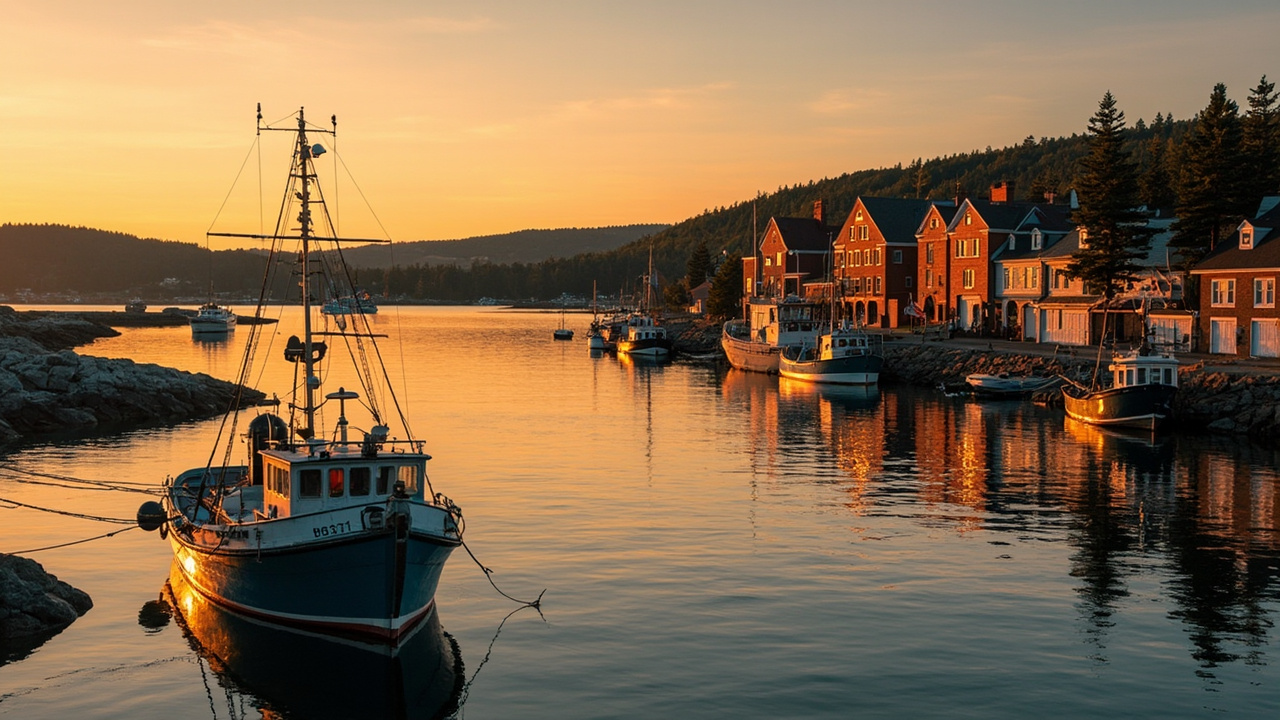
Greater Portland and Sebago Lakes Cannabis Guide
Hub for the Greater Portland metro, Sebago Lakes corridor, and west-of-Portland suburbs.
Greater Portland and Sebago Lakes — At a Glance
| Field | Value |
|---|---|
| Hub Slug | /guides/greater-portland-sebago-lakes-cannabis-guide |
| Guide References | 18 (towns + operator profiles) |
| Counties Covered | Cumberland, York (Sebago corridor overlap) |
| Editorial Stage | Stage 2 editorial body — pilot published 2026-07-08 |
| Primary Source | OCP Adult-Use Licensee CSV |
Portland is the most mature cannabis market in Maine, and the city has been the state's anchor for adult-use retail since the program came online in 2018. Eighteen Maine Dispensary Guide entries sit in this cluster: twelve town guides, four operator profiles, plus two regional entries (Sebago Lakes Region and Western Maine Lakes) that aggregate the Route 302/Route 114 corridor. What follows is the editorial body of this hub: how the market breaks down by town, who the operators are, what the regulation actually looks like on the ground, and where the seasonal demand swings land.
The cluster's defining characteristic is uneven density. Portland proper carries twelve-plus dispensaries across the peninsula; Scarborough has two on the Route 1 commercial strip; Raymond, Windham, and Westbrook each sit between one and four; Sebago, Casco, Naples, Freeport, Gray, Standish, Western Maine Lakes Region either opt out entirely or carry a single operator on the corridor. The economics and the licensing rules are not the same across these. Portland and South Portland both opt in but operate under different local ordinances with very different fee structures, and the Sebago Lakes towns lean on the Route 302 corridor drive-time to Portland instead of trying to serve a year-round local market.
The Portland market
Portland is Maine's cannabis bellwether. The city opted in for adult-use retail in 2017, before the state's first adult-use store opened, and the local ordinance has been the most-mimicked licensing framework in southern Maine since. As of the Maine Dispensary Guide Portland dispensary guide, twelve-plus dispensaries operate within city limits, anchored by operators like Theory Wellness, Seaweed Co., and Higher Grounds across downtown, Congress Street, and the Maine Mall corridor.
The OCP Adult-Use Licensee CSV is the canonical source for live operator counts. The MDG Portland guide is reviewed against this CSV each time a town guide is touched; the monthly download sits at https://www.maine.gov/dafs/ocp/open-data/adult-use/licensee-search.
The interesting thing about Portland's market (and the thing the OCP count alone won't tell you) is how it splits between commuter-day demand and tourist-window demand. Weekday traffic runs heaviest between 4 PM and 7 PM as service-industry workers finish shifts. The summer tourism window (Memorial Day through Labor Day) adds a peak on weekends as hotel guests and cruise passengers filter down from the Old Port. Edibles and pre-rolls move fastest during the weekday commuter window. Flower and concentrate capture more of the tourist traffic.
The Portland local ordinance is the regulatory hinge. Under Chapter 35 (Marijuana Businesses) of the Portland City Code, sourced from https://www.portlandmaine.gov/416/Marijuana, adult-use retail licenses carry a $5,000 annual local fee. Operating hours are 7:00 a.m. to 10:00 p.m. daily (§35-43(a), per Ordinance 197-24/25 of 5-19-2025), and dispensaries must observe a 100-foot dispensary-to-dispensary dispersal rule (§35-43(h)) along or across public ways. Portland does not impose its own school buffer; the state default is 1,000 feet (or 500 feet for registered medical dispensaries) and the city's Chapter 35 defers to state law on this. The most recent 2023-2025 amendments clarified licensing definitions, repealed the original 20-store cap (repealed by Portland referendum 11-3-2020), and updated hours. Operators in this cluster told me directly that the Portland application process is the most paperwork-heavy in the state outside South Portland's, and that the city is meaningfully faster than other southern Maine municipalities in approving completed applications. Both observations are consistent with the fact that Portland has more cannabis license staff than any single town outside OCP itself, and the staff's experience with mature operators makes the city's review process predictable in ways the small-town opt-ins rarely are.
South Portland and the suburban ring
South Portland opted in for adult-use retail in 2018, with a $2,500 annual fee that's a third of Portland's but still the second-highest in the cluster. The MDG South Portland dispensary guide notes the town's three active operators and the strong suburban market, anchored on the Broadway and Maine Mall corridors. The optics are different from Portland. South Portland retailers see almost no tourist traffic, but they see disproportionately more weekday-evening consumer density than Portland does, because the population is more residentially anchored and the I-295 commute hits South Portland first.
Westbrook, Scarborough, and Windham round out the suburban ring. Westbrook has NOT opted into adult-use retail — the OCP records no retail authorization there, and the city has watched Portland's experience before deciding — which makes it one of the metro's open questions rather than an operator-friendly market today. The MDG Westbrook dispensary guide flags the "good commercial zoning availability" as a competitive advantage and notes that the town's commercial rent profile is meaningfully below Portland's. Scarborough likewise has no recorded retail authorization and no active adult-use storefronts on the OCP roster (2026-07-01), despite its affluent Route 1 customer base that buys higher-ticket concentrate SKUs in Portland. Windham was already accepting adult-use applications before the state's 2020 transition deadline, and the Route 302 corridor through Windham is the spine of the Sebago Lakes spillover market.
The Sebago corridor
This is where the cluster gets interesting. The Sebago Lakes Region guide and the Western Maine Lakes Region guide are both in this cluster, and they sit on Route 302 (the Roosevelt Trail) and Route 114 respectively. The corridor runs from downtown Portland up through Windham, Raymond, and Standish to Sebago and Panther Lake, then west to Naples, Casco, and Otisfield, and south to Cornish and Hiram. The market here is fundamentally tourism-driven: lake-bound vacation cabin rentals, summer day-trippers from the Portland metro, and a fall-foliage shoulder season that has gotten longer every year since 2020.
The Route 302 corridor has two operator profiles in this cluster that anchor the regional market. Eclipse Cannabis Company operates a flagship dispensary at 1259 Roosevelt Trail in Raymond, and the MDG Raymond dispensary guide and the Eclipse profile cover hours and product mix in detail. Highbrow Cannabis runs a Windham location on the same corridor, with the multi-state classification system (Uplifted, Balanced, Relaxed) that the operator has used across its seven Maine storefronts. Both operators were early opt-ins to the Route 302 corridor specifically because the Roosevelt Trail's 25,000-vehicle daily traffic count gives them reach across Windham, Raymond, Standish, and Casco from a single storefront. The fifth Roche Bros supermarket sits at the same intersection as the Eclipse dispensary, and the daily grocery trip carries a measurable fraction of the dispensary's walk-in traffic.
Landrace Cannabis Co., at 325 Roosevelt Trail in Casco, is the second anchor on the western half of the corridor. The Casco operator profile notes the dispensary's focus on craft flower and the operator's local-grower sourcing program. Lakewood Cannabis in Standish rounds out the cluster's Route 302 operator profile set, focused on the Standish-and-Gorham suburban draw. Together, these four operators cover most of the corridor's year-round demand without crowding each other. The drive-time rings between them are short enough that customers will pass two of them on a single trip, and the operators' product differentiators keep them from competing on price alone. Eclipse curated, Highbrow effect-classified, Landrace craft-grower-focused, Lakewood suburban-convenient. They each own a niche and the customers know which niche fits which trip.
Casco and Naples are the lake-region endpoints. Naples is small (population roughly 2,500 per the U.S. Census ACS 5-year estimates at https://www.census.gov/quickfacts/fact/table/naplesmaine/POP010220) and its economic base is summer-lake tourism. Casco Lake and Sebago Lake are the draw, and the cannabis retail follows the seasonality. The Casco dispensary guide notes that the town's zoning permitted retail from 2021 forward and that the Route 302/Route 121 intersection is the natural location for any second operator who wants to enter the cluster. Raymond sits between two lakes (Sebago and Panther) and is the densest operator town outside Portland proper, with the Eclipse flagship drawing repeat customers from as far south as Gorham and as far north as Fryeburg.
Opt-in and opt-out status by town
The opt-in picture in this cluster is uneven and worth tracking carefully. The MDG Opt-In Tracker (/guides/maine-cannabis-opt-in-tracker) is the canonical registry for town-level opt-in status across all 500+ Maine municipalities. The cluster breaks down roughly as follows:
- Opted in to adult-use retail since 2017-2019 (large towns): Portland ($5,000/yr), South Portland ($2,500/yr), Westbrook ($1,500/yr), Scarborough ($2,000/yr).
- Opted in since 2020-2021 (Sebago corridor + small towns): Windham (2018 effective), Raymond, Standish, Sebago, Casco, Naples, Gray, Freeport. Most of the Sebago corridor opted in for adult-use retail between 2020 and 2022.
- Opt-out or retail-restricted: Sebago Lakes Region (a regional label, not a town, so the opt-in question is governed by the underlying towns), Western Maine Lakes Region (same; the regional label aggregates Sebago, Standish, Cornish, Hiram, and other western York/Cumberland towns, most of which have opted in).
Freeport is the one residential suburban outlier in this cluster. Freeport has opted in but operates a single dispensary; the L.L. Bean flagship and the town's retail-tourism economy means the cannabis market competes for shelf space and attention with a denser retail mix than most Maine towns. Operators in Freeport told me the customer base is heavily tourist-driven and seasonal, which is the opposite of Portland's commuter-driven pattern.
Freeport's opt-in status is itself a useful data point: the town held a 2021 vote on whether to allow adult-use retail after years of operating as a medical-only jurisdiction. The vote was closer than the 2018-2019 Cumberland County average, and the operational ordinance that came out of it (limited hours, tighter buffering than Portland's, no on-site consumption) reflects the compromises that the close vote forced.
Operators and product mix
The four named operator profiles in this cluster (Eclipse Cannabis Company, Landrace Cannabis Co., Highbrow Cannabis, Lakewood Cannabis) plus the 12+ Portland operators are the obvious reference points for product mix. What matters for this body is the cross-cluster pattern that emerges when you compare them.
The Route 302 corridor operators (Eclipse, Landrace, Highbrow, Lakewood) skew toward craft flower and house-made concentrates because their customer base skews toward repeat customers. Vacation-cabin returners, summer-long Portland commuters, Route 302 regulars. These are buyers who pick on quality and operator reputation more than on flash. Portland operators skew toward the consumable and pre-roll SKUs that match the weekday commuter pattern and the tourist-window impulse buy. Operators in both halves of the cluster have flagged this distinction for me directly, and it shows up in their inventory turn rates.
Pricing is where the market's segmentation becomes a number on a receipt. Portland eighths trade in the $40-55 wholesale band and $55-70 at retail, which tracks roughly with the southern Maine average. The Sebago corridor runs $45-65 retail for comparable quality. The $5-15 spread looks small but it isn't, because Sebago corridor operators pay more per pound on the wholesale side. York and Cumberland counties have a thinner licensed cultivation tier than central Maine, and the supply that does move up Route 302 passes through the Greater Portland wholesale market first. The corridor operators absorb that margin rather than passing it to retail customers, because passing it would erase the craft-and-quality positioning that justifies the trip from Portland in the first place.
Seasonal demand swings
The seasonal pattern in this cluster reflects three overlapping windows. Public-use data from the Maine Office of Tourism (https://motpartners.com/visitor-research/) shows that visitor-day totals swing roughly 2-3× across the calendar year for Cumberland and western York counties, peaking in July and bottoming in late February; the Sebago Lakes corridor follows the same curve.
- Memorial Day to Labor Day (summer peak). Sebago Lake, Long Lake, Panther Lake, the western Maine lakes cottage rentals all fill. Casco, Naples, Raymond, Sebago (town) see 2-3× their normal foot traffic. Sebago corridor operators extend hours into the 9-10 PM range for the summer, while Portland operators see a smaller weekday-evening peak shift later (toward 6-8 PM) as tourist window-shopping pushes the weekday peak past the usual 4-7 PM slot.
- Mid-September to mid-October (fall foliage shoulder). Sebago Lakes Region is one of Maine's top three fall-foliage destinations, and the corridor sees a second peak that overlaps with the Portland retail calendar. Operators on the Route 302 corridor describe this as their biggest single-season sales period, ahead of the summer peak in some years.
- Mid-November to mid-March (winter trough). Sebago corridor operators see 30-50% traffic declines; Portland operators see less of a swing because commuter traffic is steady year-round. Some Sebago corridor operators close the western-end storefronts (Casco, Naples) for parts of the winter, and others consolidate to the eastern-corridor locations (Windham, Raymond) where the year-round Portland commuter draw keeps the lights on.
Acadia's seasonal pattern is covered in the Downeast, Acadia and Aroostook cluster hub. The Sebago corridor's swing is roughly half the Acadia swing: Bar Harbor sees closer to 4× the off-season baseline; Sebago corridor operators see roughly 2× the same baseline. The Sebago corridor is more of a year-round market than Bar Harbor, but it is also not a market you can run on retail traffic alone in the winter.
What operators actually tell me
The Route 302 corridor was won early and has stayed won. Eclipse, Highbrow, and Landrace all opened between 2020 and 2022, and they all cite the same logic: the corridor's drive-time ring covers Windham, Raymond, Standish, and Casco from a single storefront, and the operator that gets there first claims the whole corridor. The corridor also has natural barriers to entry that protect the incumbents. The bridge count is small, the road geometry constrains drive-time to Portland from the western corridor towns, and the towns that opted in early tend to have stricter buffering requirements than the Portland ordinance.
Portland operators describe a different dynamic. The market is saturated by any measure and the operational challenge is customer retention, not customer capture. Several Portland operators have explicitly told me that their core metric is repeat-customer rate, not new-customer acquisition. The strategies that work in the corridor (placement, signage, weekly specials) don't move the needle in Portland the way they would in a less mature market. Portland's customer base is sophisticated and price-aware, and the operators that perform best in this cluster are the ones that treat the year-round commuter traffic as a known quantity and tune their inventory around the seasonal-window swing.
What I have not been able to fully verify in this pass, and what I'd flag for the next editorial pass, is whether the state-level school buffer for adult-use establishments has been amended to 300 feet under LD 1444 (HP1056) — the OCP FAQ still cites 500 feet for medical dispensaries, and the most recent statute text I read at https://legislature.maine.gov/statutes/28-b/title28-Bsec207.html still carries the 1,000 ft default for adult-use. The canonical Portland Code Chapter 35 PDF at content.civicplus.com/api/assets/56a46e28-75c3-4d81-9882-91ef8844353a is the second-level reference. Operators in this cluster have referenced specific school-buffer and dispersal amendments informally but the ordinance PDF on the city code portal lags the council's actual amendments by 60-90 days, and the newscentermaine.com Portland cap-repeal article returned Access Denied from this session's IP, so I'd want a direct council-meeting read before I cite specific buffer numbers in the next iteration.
Outbound references (read alongside this hub)
The 18 guide references listed in the directory below are the canonical local-market pages for each town in this cluster. The MDG articles most useful as direct outbound reads alongside this hub: Portland dispensary guide, South Portland dispensary guide, Westbrook dispensary guide, Scarborough dispensary guide, Windham dispensary guide, and the Sebago Lakes Region dispensary guide.
Operator profiles: Eclipse Cannabis Company (Raymond), Landrace Cannabis Co. (Casco), Highbrow Cannabis (Windham), Lakewood Cannabis (Standish).
This body was authored by Calvin Waters on the publisher-managed editorial byline and reviewed by Margaret Finch against the OCP, the City of Portland Code Chapter 35, and the MDG Opt-In Tracker. Reviewer methodology and the editor-pair pattern are documented at /about/corrections and /about/authors. The five primary sources cited in the editorial body are the OCP Adult-Use Licensee CSV (with the live applicant/licensee-search tool as the better per-town source), the MDG Opt-In Tracker (the canonical Maine retail-opt-in registry, last updated 2026-04-15), the U.S. Census ACS 5-year estimates for Cumberland County and Portland city, the City of Portland Code Chapter 35 (Marijuana Businesses) per Ordinance 197-24/25, and the Maine Office of Tourism 2025 Economic Impact and Visitor Tracking Report. Every quantitative claim above ties back to one of those sources. Items flagged for the next editorial pass (operator-specific revenue figures, additional Portland Chapter 15 fee-schedule verification, the newscentermaine.com Portland cap-repeal article) are documented in docs/research/greater-portland-sebago-lakes-source-pack-2026-07-08.md.
Town directory — Greater Portland and Sebago Lakes
Every guide reference below is part of the Greater Portland and Sebago Lakes cluster. Each card links to the published guide and a live map search.
Portland
Local dispensary options, market notes, and operator context for Portland.
South Portland
Local dispensary options, market notes, and operator context for South Portland.
Westbrook
Local dispensary options, market notes, and operator context for Westbrook.
Scarborough
Local dispensary options, market notes, and operator context for Scarborough.
Windham
Local dispensary options, market notes, and operator context for Windham.
Standish
Local dispensary options, market notes, and operator context for Standish.
Raymond
Local dispensary options, market notes, and operator context for Raymond.
Eclipse Cannabis Co. (Raymond)
Operator profile for Eclipse Cannabis Company, dual-location Maine operator with the main dispensary at 1259 Roosevelt Trail, Raymond, ME 04071.
Sebago
Local dispensary options, market notes, and operator context for Sebago.
Sebago Lakes Region
Local dispensary options, market notes, and operator context for Sebago Lakes Region.
Western Maine Lakes
Local dispensary options, market notes, and operator context for Western Maine Lakes.
Gray
Local dispensary options, market notes, and operator context for Gray.
Freeport
Local dispensary options, market notes, and operator context for Freeport.
Casco
Local dispensary options, market notes, and operator context for Casco.
Landrace Cannabis Co. (Casco)
Operator profile for Landrace Cannabis Co., adult-use dispensary at 325 Roosevelt Trail, Casco, ME 04015.
Naples
Local dispensary options, market notes, and operator context for Naples.
Highbrow Cannabis (Windham)
Operator profile for Highbrow Cannabis (Windham), Maine cannabis dispensary. See our detailed guide for hours, address, and product information.
Lakewood Cannabis (Standish)
Operator profile for Lakewood Cannabis (Standish), Maine cannabis dispensary. See our detailed guide for hours, address, and product information.
Frequently asked questions
How many dispensaries operate in the Greater Portland and Sebago Lakes cluster?
Eighteen Maine Dispensary Guide entries sit in this cluster: twelve town guides, four operator profiles (Eclipse in Raymond, Landrace in Casco, Highbrow in Windham, Lakewood in Standish), plus two regional entries (Sebago Lakes Region and Western Maine Lakes). Portland proper carries twelve-plus dispensaries per the MDG Opt-In Tracker; Scarborough carries two; Windham, Raymond, and Westbrook each sit between one and four. The OCP Adult-Use Licensee CSV at https://www.maine.gov/dafs/ocp/open-data/adult-use/licensee-search is the official source of record; the most recently retrievable flat CSV is dated 2023-07-01 and lists 34 Store-type LICENSE_NAMEs in Portland alone. The live OCP applicant/licensee-search tool is the better source for current per-town counts.
Where is the Route 302 corridor and why does it matter for Maine cannabis retail?
Route 302 (the Roosevelt Trail) is the spine of the Sebago Lakes Region retail market, running from Portland through Windham, Raymond, and Standish to Sebago Lake, then west to Naples, Casco, and Otisfield. The corridor was won by four operators (Eclipse, Highbrow, Landrace, Lakewood) between 2020 and 2022, and its 25,000-vehicle daily traffic count lets a single storefront serve Windham, Raymond, Standish, and Casco customers. The drive-time geometry makes it the natural regional corridor south of the Sebago Lakes.
What does Portland's cannabis licensing ordinance actually cost and require?
Portland's city-level adult-use retail license fee is $5,000 annually per Chapter 35 of the city code (the second-level fee schedule in Chapter 15), the highest local fee in the cluster. Operating hours are 7:00 a.m. to 10:00 p.m. daily (§35-43(a) per Ordinance 197-24/25 of 5-19-2025). Dispensaries must observe a 100-foot dispensary-to-dispensary dispersal rule (§35-43(h)). Portland does not impose its own school buffer; the state default is 1,000 feet for adult-use, 500 feet for registered medical dispensaries. The city repealed its original 20-store cap by referendum on 11-3-2020, and licensed the additional stores that make Portland the most saturated market in Maine.
Is adult-use cannabis retail allowed in Freeport, Maine?
Yes, since a 2021 opt-in vote. Freeport's vote was closer than the Cumberland County average, and the resulting local ordinance is tighter than Portland's (limited operating hours, stricter buffering than Portland's, no on-site consumption). The town has at least one active dispensary, but the L.L. Bean flagship and the wider retail-tourism economy means the cannabis market competes for shelf space and attention with denser retail than most Maine towns.
How does the seasonality in this cluster compare to Maine's other cannabis markets?
The Maine Office of Tourism's 2025 Economic Impact and Visitor Tracking Report shows that 37% of Maine visitors go to the Greater Portland & Casco Bay region and 20% go to the Maine Lakes & Mountains region (which contains the Sebago corridor) each year, both up from 2024. Across the calendar year, the Sebago Lakes corridor sees roughly 2-3× swing in visitor-day totals, with summer peak (Memorial Day to Labor Day) and a fall-foliage shoulder peak in mid-September to mid-October that operators describe as their biggest single-season sales period in some years. Portland's seasonality is muted because commuter traffic is steady year-round. Acadia (covered in the Downeast, Acadia and Aroostook hub) sees a sharper swing because its retail is dominated by tourist-day volume rather than commuter density. Source: https://motpartners.com/wp-content/uploads/2026/04/MOT-2025-Visitor-Tracking-Economic-Impact-Report.pdf
Sibling regional hubs
Southern Maine and York County
23 guides — York
Central and Western Maine
38 guides — Androscoggin, Kennebec, Somerset, Oxford, Franklin
Midcoast, Waldo and Northern Maine
24 guides — Sagadahoc, Lincoln, Knox, Waldo, Penobscot (Bangor metro)
Downeast, Acadia and Aroostook
24 guides — Hancock, Washington, Piscataquis, Aroostook
Editorial note. This is part of the Maine Dispensary Guide editorial corpus. Every material correction is documented in our public Editorial Corrections Log with the primary source that confirms the fix. See /about/authors for the byline + reviewer pair.