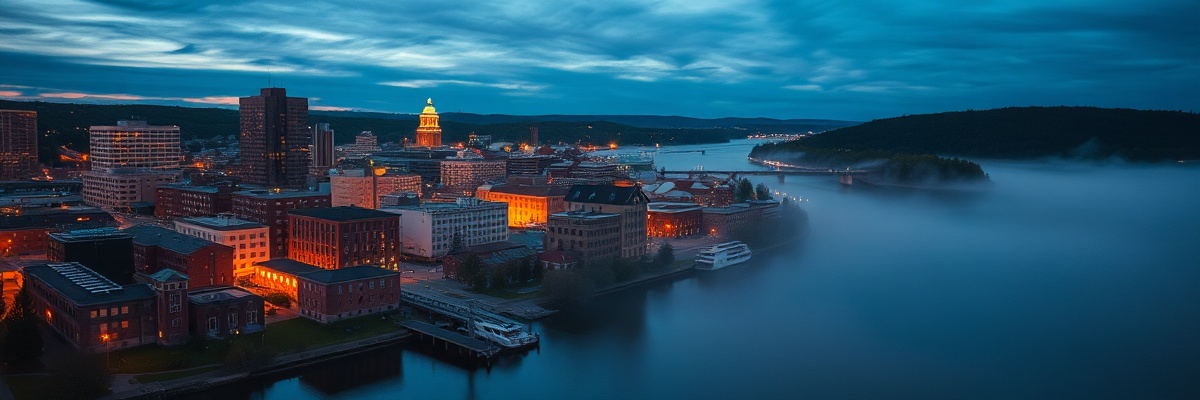
Bangor Dispensary Guide
How to open a cannabis dispensary in Bangor, Maine
Bangor at a Glance
| Requirement | Details |
|---|---|
| License Required | Maine OCP Adult-Use Retail License |
| Local Fee | $2,500 annually (varies by zone) |
| School Buffer | 500 ft minimum |
| Operating Hours | 8 AM - 10 PM (state-mandated) |
| Commercial Rent | $10-18/sq ft annually |
| Current Dispensaries | 4-5 (limited operator landscape) |
Why Bangor?
Bangor is Maine's third-largest city - about 100,000 people in the metro area. Here's the thing: there's only 4-5 dispensaries here. Lewiston has more, and Portland has triple that. With 4-5 stores for 100,000 metro residents, Bangor has a realistic entry point for operators focused on sustainable economics rather than market-share speculation.
What I keep hearing from operators is that Bangor is a different beast entirely. Portland customers are tourists and downtown dwellers who want a curated experience. Bangor customers are different - they're locals with jobs, families, and routines. Healthcare workers finishing night shifts. Military families stationed at the Air Force base. College professors and staff from Husson and the University of Maine. These aren't people who plan a trip to the dispensary; they're people who stop on the way home from work.
The implications for your business are significant. You don't need Instagram-worthy bud wall displays in Bangor. You need fair prices, consistent product availability, and staff who remember regulars by name. It's a relationship business, which sounds old-fashioned, but it works.
The Real Talk
Bangor Market Data
Understanding who your customers are matters more in Bangor than almost anywhere else in Maine. This isn't a tourist town - it's a working-class city with some unique characteristics that affect how a dispensary operates.
| Factor | Assessment |
|---|---|
| Metro Population | 100,000+ |
| Primary Industries | Healthcare, Education, Retail, Military |
| Current Competition | Low - real opportunity |
| Median Household Income | $52,000 |
| Access | I-95, Route 1A, Bangor International Airport |
The median household income of $52,000 tells an important story. These aren't wealthy Portland consumers spending $150 per visit on high-quality concentrates. Bangor customers are price-conscious in a way that Portland operators don't have to be. Your average sale might land closer to $60-75 than the $100+ you'll see in southern Maine.
But here's the counterbalance: volume. When you're the only game in a 60-mile radius, people make the trip. I've talked to operators who see customers driving down from Houlton, Caribou, and the Maine-Port border towns - places that haven't had legal access to cannabis products until now.
Local X-Factor: Northern Maine's Catchment Area
What sets Bangor apart: People from all over northern Maine - I'm talking Houlton, Aroostook County, the towns between - they currently have nowhere to go. The nearest options are Portland or maybe Lewiston. That's a 60-90 minute drive for customers who want legal product.
Strategic Implication: If you're the only decent option up here, people will drive to you. You're not just competing for Bangor's 100K - you're drawing from a region that has essentially zero dispensary access right now.
Aroostook County is a perfect example. It's the northernmost county in Maine, bordering Canada, with a population of about 70,000 people spread across rural towns. The closest dispensary to most of those towns is over an hour away. That's not a minor inconvenience - for many residents, it's a barrier that means they simply don't buy legal cannabis.
When a dispensary opens in Bangor with good highway visibility and consistent hours, those Aroostook County customers become reachable. Not everyone will make the trip, but enough will that it affects your revenue projections. A conservative estimate might be that 10-15% of your customers come from outside the Bangor metro area - and if you're good, that number climbs.
Local Regulations
Bangor permits cannabis retail under state regulations, but getting from application to opening day requires navigating both state and local requirements. Here's how it typically breaks down.
The State Piece (OCP): You'll start with the Maine Office of Cannabis Policy. The Adult-Use Retail License application requires documentation of your business structure, financial backing, criminal background checks for principals, and a detailed operations plan. The current timeline from complete application to approval is typically 60-90 days, though it varies. You'll pay a non-refundable application fee and, upon approval, a license fee.
The Local Piece: After state approval, you need to deal with Bangor city government. This means presenting your business plan to the city council or planning board, depending on your location and local zoning. Bangor's commercial zones have specific requirements for cannabis retailers, including that $2,500 annual local fee I mentioned. You'll also need to verify your proposed location meets the distance requirements - 500 feet from schools, 300 feet from churches.
Common Mistake: Operators sometimes assume the state license is the hard part and the local piece will be easy. In Bangor, it's often the reverse. The city has been cautious about cannabis businesses, and getting local approval can take longer than the state process. Start both simultaneously, but don't sign a lease until you have preliminary local approval in writing.
- State license required - OCP Adult-Use Retail
- Local zoning - Must be in permitted commercial zone
- Local fee - Approximately $2,500 annually
- Distance requirements - 500 ft from schools, 300 ft from churches
- Security requirements - Standard OCP requirements apply
The Bangor Competition Landscape
Four to five dispensaries currently operate in the Bangor area. This is a surprisingly low number for a metropolitan area of 100,000 people. For context, Portland has 10-12 dispensaries for roughly the same population. Bangor's relative undersupply creates an opportunity that simply does not exist in southern Maine.
The existing dispensaries are not evenly distributed across the city. They cluster in specific corridors, leaving portions of the Bangor market without convenient access. The areas around the airport, the Bangor Mall, and the outer parts of the metro (Hermon, Hampden, Old Town) are notably underserved. A location that serves these areas could capture customers who currently have to drive across town or skip the trip entirely.
None of the existing Bangor dispensaries have aggressively pursued delivery service to northern Maine communities. Operators report that the distance and logistics to Aroostook County make delivery economically challenging, but the same could have been said about rural delivery service in other industries before technology changed the calculus. A dispensary that cracks the delivery problem for towns within 45 minutes of Bangor could differentiate meaningfully.
Military and Healthcare: Bangor's Unique Demographics
Bangor's economy has two major anchors that set it apart from other Maine markets: the United States Air Force base and the healthcare sector. Both create distinct customer demographics that a dispensary operator should understand.
Bangor is home to a significant Air Force installation that brings military families into the area. Military personnel are stationed at the base for multi-year assignments, which means they become permanent residents rather than transients. They have steady pay, stable housing, and a need for local services. Military families also often come from states where cannabis was legal before Maine, so they arrive with established consumption patterns and fewer stigmas around dispensary purchases.
The healthcare sector is even larger. Eastern Maine Medical Center (now part of Northern Light Health) is one of the largest employers in the region and a major tertiary care facility that draws patients from across northern and eastern Maine. Healthcare workers—nurses, technicians, support staff—have shift schedules that create off-peak retail opportunities. The nurse finishing a night shift at 7am is a customer that a 9-to-5 retailer might never see.
Both demographics have something in common: they are institutional customers with predictable schedules and steady incomes. Building a dispensary that serves these populations means understanding their rhythms and adjusting staffing and inventory accordingly.
Next Steps
- Apply for state license through OCP
- Identify location in permitted commercial zone
- Verify distance requirements with city planning
- Review security requirements
- Prepare business plan
Frequently Asked Questions
How many licensed dispensaries are currently operating in Bangor?
Bangor has 4-5 licensed adult-use dispensaries for a metro population of approximately 100,000 people. This makes Bangor significantly underserved compared to Portland's ratio.
What makes Bangor different from Portland for cannabis retail?
Bangor serves as northern Maine's primary catchment area. Patients and customers travel from Houlton, Presque Isle, Dover-Foxcroft, and even parts of Aroostook County to shop Bangor dispensaries. One Bangor store can draw from a region of 200,000+ potential customers.
Does Bangor's military presence affect cannabis demand?
Yes. Bangor's large military and VA healthcare population is a significant demographic. Veterans report higher rates of medical cannabis use for PTSD and chronic pain, creating a steady patient base distinct from Portland's recreational tourist market.
What is Bangor's local licensing process?
Bangor requires municipal approval before the OCP will issue a license. The city council holds public hearings on cannabis license applications. Entrepreneurs should attend these meetings and demonstrate community benefit plans.
Is Bangor a good market for a first-time operator?
Yes. With only 4-5 stores for 100,000 metro residents, Bangor has a realistic market entry point focused on differentiation rather than raw market capture.
External Resources
- Maine dafs/ocp/adult-use
- City of Bangor Official Website
- Maine sos/
This information is for informational purposes only. Verify current requirements with OCP and the City of Bangor before applying.
Editorial note. This guide is part of the Maine Dispensary Guide editorial corpus. Every material correction to this page is documented in our public Editorial Corrections Log with the primary source that confirms the fix.
Read the operator guide
For the Maine-specific rules and operator context behind the dispensaries above, start with these core and topic-specific references:
See also: Maine dispensary guides nearby
Other Penobscot County dispensary guides: