Security Requirements
Understanding Maine's dispensary security requirements and best practices
Overview
Maine requires security systems for all cannabis stores. The rules come from 28-B M.R.S. §602 and OCP security regulations. Their goal is to protect your inventory, employees, and customers. This isn't just about checking boxes—it's about protecting everything you've built.
Video Surveillance: Your 24/7 Witness
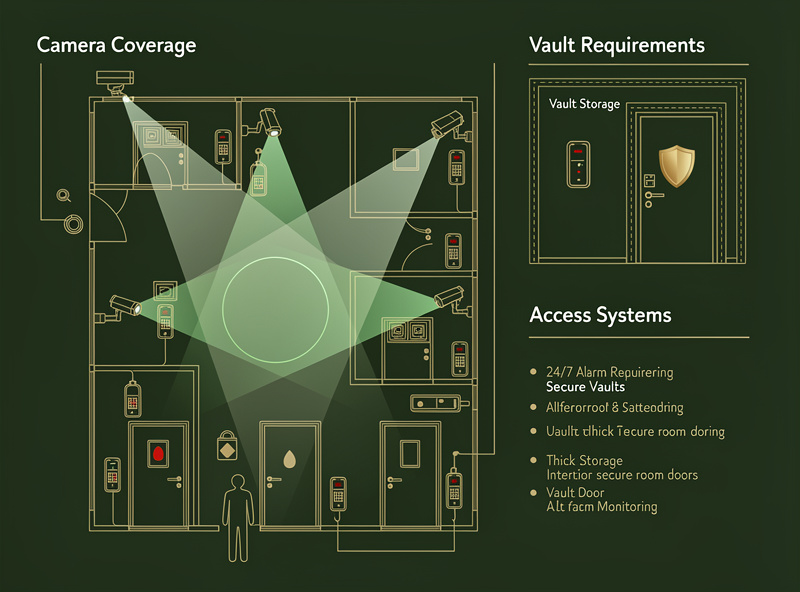
Maine OCP requires complete video surveillance covering all critical areas. This is your most important security investment.
Mandatory Coverage Areas:
- All entry and exit points—every door, including emergency exits
- Point-of-sale areas—where transactions occur
- Vault and safe locations—where cash and product are stored
- Storage rooms—all inventory storage areas
- Anywhere inventory is handled—receiving, staging, packaging
- Parking lots—property perimeter and vehicles
- Secure areas—any area with restricted access
Technical Requirements:
- Resolution: Minimum 1080p, 4K recommended for clarity
- Frame rate: Minimum 15 fps, 30 fps preferred
- Low-light capability: Night vision for 24/7 coverage
- Retention: Minimum 90 days, 6-12 months recommended
- Storage: Secure, encrypted local and/or cloud storage
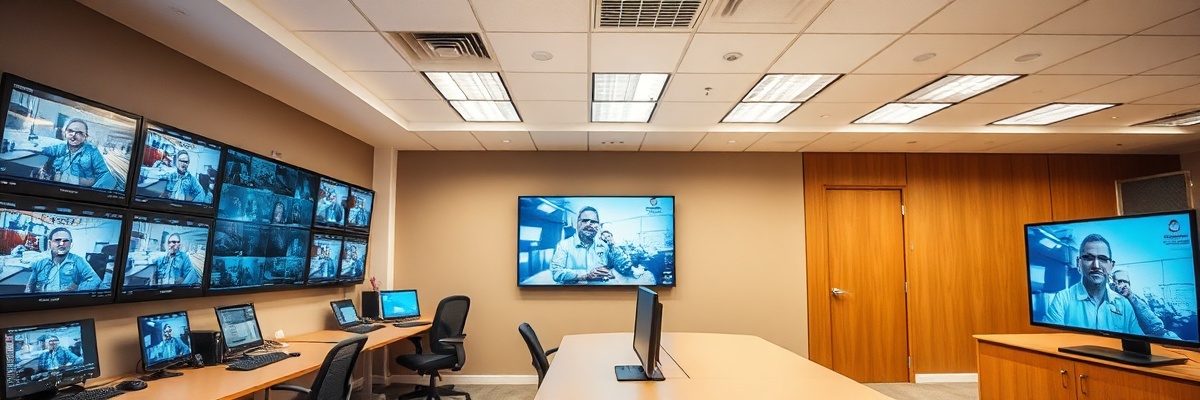
- Monitoring: 24/7 real-time monitoring recommended
Expert Scenario: The Camera That Caught Everything
A Portland store was robbed at closing time. Their cameras showed the entry, safe, and parking lot clearly. Footage was stored off-site. Police found the robbers within 48 hours. They recovered 90% of stolen product. Without those cameras, the loss would have been devastating.
Hidden Challenge: The "Blind Spot" That Sneaks Up
Many operators focus on interior cameras. But they forget about delivery entrances, HVAC access points, roof access, basement entries, and dumpster areas. A complete security plan covers ALL potential entry points.
Alarm Systems: Immediate Response
A monitored alarm system is mandatory for all Maine dispensaries.
Required has:
- 24/7 monitoring—professional monitoring service
- Motion detection—throughout facility
- Door and window sensors—all entry points
- Glass break sensors—all windows and glass doors
- Duress alarm—silent panic button for employees
- Fire/smoke integration—connected to fire department
Monitoring Considerations:
- Response time: Police, fire, and medical dispatch
- Backup power: 24+ hour battery backup
- Cellular monitoring: Landline-independent communication
Access Control: Limiting Who Gets In
Controlling who can enter sensitive areas is critical for protecting inventory.
Required Controls:
- Keycard or biometric entry—for all restricted areas
- Audit trails—who entered, when, how long
- Visitor management—sign-in, escort requirements
- Single entry point—one main door for customer/employee access
Best Practices:
- Limit employee access to areas necessary for their job
- Change codes/cards immediately when employees leave
- Use 2-factor authentication for high-security areas
- Maintain logs for at least one year
Secure Storage: Protecting Your Value
Both cash and product need secure storage that meets specific standards.
Safe Requirements:
- Fire rating: Minimum 1-hour fire resistance required
- Weight: Bolt-down or heavy enough to prevent removal
- Size: Adequate for daily cash and high-value product storage
- Construction: Steel construction with hardened shell
- Combination: Electronic or dial, changeable codes
Budget:
Expect to invest $2,000-$10,000 for a compliant safe. This is not an area to cut corners—your safe protects your most valuable assets.
Inventory Security: The Inside Threat
Internal theft is a bigger risk than robbery for most stores.
Prevention Measures:
- Two-person rule: Never handle inventory alone
- Bag checks: Random employee bag/coat checks
- Camera coverage: All areas where product exists
- Inventory tracking: Seed-to-sale software required
- Daily counts: Regular inventory reconciliation
- Receipt protocols: Document all product movement
Expert Scenario: The Employee Who Didn't Get Away With It
A Bangor store noticed inventory was shrinking. It lost about 2% each month. Waste and sales couldn't explain it. They started bag checks and added cameras in employee-only areas. Within two weeks, they caught an employee hiding product. Without these measures, the $15,000 monthly loss would have continued.
Physical Security: Fortifying Your Facility
Recommended Upgrades:
- Security glass—laminated or polycarbonate in customer-facing areas
- Steel doors—at vault and secure areas
- Security lighting—motion-activated exterior lighting
- Fencing—perimeter security for exterior storage
- Alarm signage—visible deterrent
- Limited windows—reduced break-in points
Security Personnel: When You Need More
Maine doesn't require security guards, but some situations call for them.
Consider Guards If:
- Location in high-crime area
- High-value inventory on-site
- History of problems in the area
- Large, high-traffic operation
- Special events or promotions
Guard Considerations:
- Unarmed guards typically sufficient (and cheaper)
- Ensure guards are licensed in Maine
- Coordinate with local police
- Guard should be visible deterrent, not provocative
Hidden Challenges Most Operators Miss
1. The Power Outage Vulnerability
What happens when the power goes out? Your security system needs 24+ hour battery backup. Without it, you could be vulnerable for hours. Many insurance policies now require battery backup.
2. The Internet Dependency Trap
If your cameras and alarm use only internet, they're useless when internet goes down. Keep cellular backup for critical systems.
3. The "After Hours" Blind Spot
Most robberies happen at closing time or during slow hours. Make sure your monitoring covers ALL hours. Pay special attention to the hour before and after opening and closing.
4. The Vendor Access Problem
Delivery people, maintenance workers, and vendors need access. But they shouldn't be alone with product or cash. Set up clear protocols for vendor visits.
Expert Pro-Tips
- Budget $30K-75K for complete security systems—this is not an area to cut corners
- Hire a security consultant—$2,000-5,000 can find gaps you'd miss
- Use licensed security vendors—required for alarm installation in Maine
- Test systems monthly—don't wait for a break-in to find failures
- Maintain relationships with local police—they can respond faster if they know your layout
- Document everything—incident reports, maintenance, updates
- Insurance requires compliance—keep OCP approval letters for your security plan
Cost Breakdown
| Component | Typical Cost | Notes |
|---|---|---|
| Camera System (12-16 cameras) | $8,000-$20,000 | Hardware, installation, wiring |
| Alarm System | $3,000-$8,000 | Monitoring, sensors, installation |
| Access Control | $2,000-$6,000 | Keycards, readers, software |
| Safe | $2,000-$10,000 | Fire-rated, bolted down |
| Physical Upgrades | $5,000-$20,000 | Lighting, doors, windows |
| Monitoring (annual) | $1,200-$3,600 | 24/7 professional monitoring |
| Cloud Storage (annual) | $3,000-$10,000 | 90+ day retention |
Extreme FAQ: Security Edition
Does my security safe need to be fireproof?
Yes. Maine OCP requires storage safes to meet fire resistance standards. The minimum is a one-hour fire rating. This protects your cash and product from theft AND fire. Expect to pay $2,000-$10,000 for a compliant safe.
How many cameras are required per square foot?
Maine doesn't specify an exact ratio, but requirements include: all entry/exit points, point-of-sale areas, vault/safe locations, storage rooms, and anywhere inventory is handled. For a typical 1,500 sq ft dispensary, plan for 12-16 cameras minimum. The key is complete coverage with no blind spots.
Can I use wireless cameras?
Not recommended. Wired cameras are the standard for cannabis security. They're more reliable and harder to disable. Wireless systems can have signal interference, battery failures, and are easier to tamper with. Hardwired systems with battery backup are the industry standard.
What happens if my security system goes down?
You must notify OCP right away. Follow their incident protocol. Extended outages (typically more than 8 hours) may require temporary closure. Many operators keep backup systems and 24/7 monitoring. This prevents gaps in coverage. Insurance policies often require specific backup procedures.
Do I need armed guards?
Maine doesn't require armed guards, but some situations warrant them. High-value locations, high-crime areas, or very large operations may benefit from security personnel. Unarmed guards are more common and can provide a visible deterrent. Many operators find that well-trained staff and solid systems reduce the need for guards.
How long must I keep security footage?
Maine requires at least 90 days of video retention. Many operators keep 6-12 months. Higher resolution means more storage costs. Budget $500-$2,000/month for secure off-site video storage.
Can I have a security system in my parking lot?
Yes, and it's highly recommended. Parking lot coverage is often required by OCP and definitely expected by insurers. Exterior cameras should capture license plates and provide clear views of the property perimeter. Consider motion-activated lighting as well.
What about employees stealing product?
This is why interior cameras are critical. Cameras must cover all areas where product is stored, handled, or moved. Many operators also use inventory tracking systems. They do random bag checks. Prevention is far cheaper than loss.
Can I install security myself to save money?
No. Maine requires licensed alarm contractors for alarm system installation. While you can set up some camera elements yourself, it's generally better to use professionals who understand OCP requirements and can ensure your system passes inspection.
Will insurance cover my security system?
Most cannabis insurance policies REQUIRE specific security measures. These include alarm monitoring, camera systems, and safe specifications. Not meeting these requirements can void your coverage. Always talk to your insurance broker.