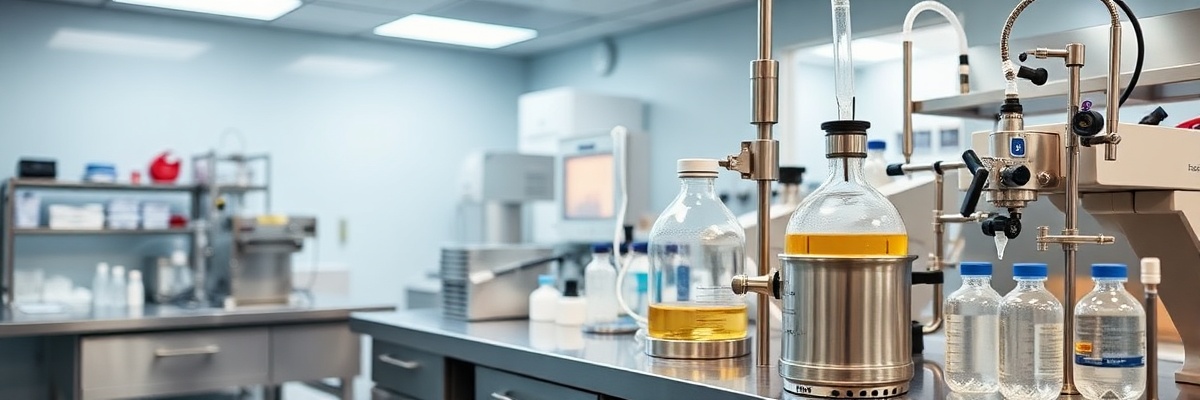
Cannabis Extraction Licensing
Volatile vs non-volatile methods. Fire safety requirements explained.
Extraction Requirements at a Glance
| Requirement | Details |
|---|---|
| License Required | Manufacturing License from OCP |
| Legal Basis | 28-B M.R.S. Section 501, OCP Rule Chapter 4 |
| Volatile Methods | Local fire marshal sign-off required |
| Non-Volatile | Lower barrier, still requires license |
| Testing | Residual solvent testing mandatory |
What Is Extraction?
Extraction separates cannabinoids and terpenes from cannabis plant material. The result is a concentrate. Concentrates sell for more than flower. They are used for dabbing. They are used for vape cartridges. They are used for edibles.
Maine requires a manufacturing license for any extraction operation. This is separate from a retail license. You cannot extract at a dispensary without the proper license.
Maine categorizes extraction licenses by class. Class 1 covers volatile solvent extraction. Class 2 covers non-volatile methods. Classes 3-5 cover intermediate or specialized processes.
Unlike some states, Maine has clear rules. The state defines what equipment needs a license.
If you are using a closed-loop BHO system, you need Class 1. If you are pressing rosin with heat and a press, you need Class 2. The class determines your fee, inspection schedule, and approved products.
Volatile vs. Non-Volatile Methods
Extraction methods divide into two categories. Volatile methods use flammable solvents. Non-volatile methods do not.
Volatile methods produce larger yields. They require more infrastructure. Non-volatile methods are simpler and safer. They produce less concentrate.
For Maine operators, the choice affects your product line. It also affects your real estate requirements. Volatile extraction in Portland needs a commercially zoned space. It also needs fire suppression infrastructure. Non-volatile operations can fit into lighter commercial spaces.
Licensing Application Steps
- Secure a location with appropriate zoning and fire marshal pre-approval
- Complete the OCP manufacturing license application with detailed equipment specifications
- Submit floor plans showing extraction room layout, ventilation, and electrical systems
- Provide equipment specifications for closed-loop systems (if volatile)
- Pass local fire marshal inspection and obtain written sign-off
- Complete OCP facility inspection before operations begin
The entire process typically takes 6-12 months for volatile extraction. It takes 4-8 months for non-volatile. Budget accordingly when planning your product launch timeline.
Method Comparison
| Method | Type | Fire Risk | Startup Cost |
|---|---|---|---|
| BHO (Butane) | Volatile | High | $100K+ |
| Propane (PHO) | Volatile | High | $100K+ |
| CO2 | Volatile | Medium | $75-150K |
| Ethanol (Cold) | Volatile | Medium | $50-100K |
| Rosin (Heat/Press) | Non-Volatile | Low | $10-25K |
| Ice Water Hash | Non-Volatile | Low | $5-15K |
Fire Safety: The Local Approval Game
Volatile extraction methods require local fire marshal approval. This is where most operators face delays. Fire code requirements vary by municipality. Some towns have cannabis-specific ordinances. Other towns apply generic commercial fire codes.
The difference can add months to your timeline. It can also add tens of thousands of dollars to your buildout.
Common fire safety requirements:
| Requirement | What You Need |
|---|---|
| Closed-loop systems | No open-path solvent recovery |
| Explosion-proof wiring | All electrical in extraction area rated for hazardous locations |
| Ventilation (HVAC) | Positive pressure, exhaust to exterior |
| Solvent storage | Fire-rated cabinet, limited quantity on site |
| Emergency exits | Direct exterior access from extraction room |
| Fire suppression | Sprinkler system or ABC extinguishers within reach |
Residual Testing: 28-B M.R.S. Section 503
All concentrates must pass residual solvent testing before sale. Maine sets limits at 5,000 ppm for common solvents:
| Solvent | Limit (ppm) |
|---|---|
| Butane | 5,000 ppm |
| Propane | 5,000 ppm |
| Ethanol | 5,000 ppm |
| CO2 | 5,000 ppm |
Testing is mandatory for every batch. Keep certificates on file. OCP can request them during inspections. Maine requires testing at licensed labs only. You cannot use an out-of-state lab for final compliance testing.
Concentrate product types regulated by Maine OCP include shatter, wax, budder, live resin, and vape oil. Each has specific stability and storage requirements. Vape cartridges require additional compliance with device safety standards.
Edibles manufacturers who source concentrate from your extraction operation must receive product that has passed all required testing. Only then can they incorporate it into food products.
Maine Extraction Market Overview
Maine's concentrate market has grown significantly. Concentrates and extracts accounted for about 28–35% of adult-use sales in 2025, up from 18% in 2023. Live resin and rosin products command the highest per-gram prices at retail, typically $40-80 per gram. Wholesale concentrate prices range from $15-35 per gram depending on quality and method.
Edibles manufacturers, vape cartridge producers, and dabbing consumers drive demand. The extract segment continues to grow as consumers seek concentrated products.
The OCP Inspection Process for Extraction Facilities
OCP inspectors check several items during facility visits. They verify closed-loop system certification. They confirm ventilation is working properly. They check solvent storage compliance. They review employee safety training records. They ensure METRC integration for concentrate tracking is active.
OCP conducts pre-licensing inspections and unannounced compliance inspections. Extraction facilities face more frequent inspections than retail-only operations. Budget for 2-4 inspections per year.
Product Types and Their Requirements
Each concentrate product type has specific compliance needs:
| Product Type | Method | Special Requirements |
|---|---|---|
| Shatter | Butane (BHO) | Stable at room temperature, requires warm storage |
| Wax/Budder | Butane (BHO) | Requires cold storage to maintain texture |
| Live Resin | Butane or propane | Cryogenic extraction, terpene preservation |
| Distillate | Multiple refining steps | High purity, winterization required |
| Rosin | Heat and pressure | No solvents, lower yield, press required |
Vape cartridges require additional compliance with device safety standards under OCP Rule Chapter 5. Battery and hardware components must be listed on your license.
Investment by Method
| Method | Equipment | Facility | Total |
|---|---|---|---|
| Rosin/Ice Water | $10-25K | $20-40K | $30-65K |
| Ethanol | $50-100K | $75-150K | $125-250K |
| BHO/CO2 | $100-200K | $150-300K | $250-500K |
Key Takeaways
- A manufacturing license is required for all extraction operations
- Volatile methods require local fire marshal sign-off before you open
- Meet your fire marshal before designing your facility
- Rosin and ice water hash offer the lowest barrier to entry
- All concentrates require residual solvent testing per batch
- Budget $30K-$65K for non-volatile, $250K-$500K for BHO/CO2
External Resources
This is for informational purposes only. Extraction involves significant safety and regulatory complexity. Consult qualified professionals before investing.
Types of Extraction Methods in Maine
Butane Hash Oil (BHO)
BHO extraction uses butane as a solvent to pull cannabinoids and terpenes from cannabis plant material. The resulting concentrate, often called shatter, wax, or budder depending on consistency, can contain 60-90% THC. Maine allows BHO extraction under specific safety protocols including closed-loop systems and explosion-proof equipment.
BHO extraction requires Class I Div 1 or Class I Div 2 electrical ratings for the extraction area. This means specialized explosion-proof wiring, ventilation systems that maintain negative pressure, and solvent storage that meets fire code requirements. The build-out costs for BHO-compliant space runs $150,000-$300,000 depending on facility size and existing infrastructure.
CO2 Extraction
Supercritical CO2 extraction uses pressurized carbon dioxide to extract cannabinoids without residual solvents. CO2 extraction produces a cleaner product that passes residual solvent testing more easily than BHO. Equipment costs run higher than BHO systems, typically $200,000-$500,000 for commercial-scale units, but operating costs may be lower due to solvent recovery and reuse capabilities.
CO2 extraction does not carry the explosion risk of hydrocarbon extraction, which simplifies facility requirements. However, the equipment requires professional installation and maintenance contracts to ensure pressure vessel compliance with Maine boiler and pressure vessel regulations.
Ethanol Extraction
Ethanol extraction uses food-grade alcohol as a solvent, making it one of the safest consumable solvent options. Ethanol extraction equipment costs range from $50,000-$200,000 depending on scale. The extraction process can be performed at cold temperatures to minimize chlorophyll extraction, producing a cleaner concentrate than room-temperature ethanol extraction.
Ethanol extraction's main disadvantage is the equipment required to recover solvent efficiently. Without proper recovery systems, ethanol consumption costs become prohibitive at commercial scale. Closed-loop ethanol systems with vacuum recovery reduce operating costs and improve safety profiles.
Extraction Equipment Requirements in Maine
OCP requirements for extraction equipment include closed-loop systems for hydrocarbon extraction, adequate ventilation, and appropriate safety certifications. Equipment must be certified for its intended use and have documentation available for inspector review.
Closed-loop systems capture and recycle solvents rather than releasing them to the atmosphere. These systems require annual certification inspections documenting system integrity, leak testing, and safety valve calibration. Maintain certification records for five years.
Ventilation requirements for extraction facilities must handle both normal operating exhaust and emergency ventilation scenarios. Explosion-proof exhaust fans rated for the specific solvent being used must provide at least 10 air changes per hour in extraction areas. Backup ventilation systems with independent power supply may be required depending on facility classification.
Solvent storage requirements limit the quantity of solvents stored in extraction areas and mandate appropriate containment systems. Hydrocarbon storage requires flame-resistant storage cabinets or separate rated buildings. Bulk solvent storage outside the extraction area must meet additional fire code requirements.
Extraction Safety Protocols
Extraction safety training must be documented for all personnel working in extraction areas. OCP inspectors verify that staff have received training on solvent handling, fire suppression, and emergency response procedures.
Hydrocarbon leak detection requires continuous monitoring in extraction areas. Catalytic bead sensors or infrared beam detection systems identify solvent leaks before concentrations reach explosive levels. Alarm systems must provide both audible and visual alerts and integrate with facility emergency response protocols.
Fire suppression for extraction facilities must use appropriate agents for hydrocarbon fires. Standard water sprinklers can actually spread hydrocarbon fires by distributing burning liquid. Dry chemical or carbon dioxide suppression systems appropriate for the specific solvent class are required.
Emergency response procedures should be posted in extraction areas and reviewed with all staff. Procedures for solvent release, fire evacuation, and medical emergencies must be documented and practiced. Annual drills verify that staff remember proper responses during high-stress situations.