Cannabis Cultivation Guide
Tier 1-4 licenses, canopy rules, and tax strategies for Maine growers
Last updated: April 14, 2026
Cultivation Requirements at a Glance
| License Tiers | Tier 1 (2K sqft) to Tier 4 (unlimited) |
| Legal Basis | 28-B M.R.S. Sections 401-405, OCP Rule Chapter 3 |
| Canopy Definition | Actual flowering space, not total facility footprint |
| Tracking Required | METRC mandatory for all tiers |
| Tax Advantage | Cultivation costs deductible as COGS Source: 28-B M.R.S. Section 405 |
Why Cultivate in Maine?
Maine's craft cannabis market rewards quality growers. Consumers here actively seek out locally grown products. They pay attention to where their cannabis comes from. This creates a high-value niche for growers who invest in quality.
Maine's 2024 adult-use market generated over $250M in sales. That number is climbing. Indoor and greenhouse growers capture top-shelf pricing that outdoor-only states cannot match. A craft indoor cultivator in Portland can earn $1,500-2,500 per pound. Commodity outdoor flower earns $400-600 per pound.
The state's OCP has matured. Licensing is predictable. Municipal opt-in patterns are understood. For operators who do the homework, Maine has one of New England's most favorable cultivation environments.
Cultivation Methods Compared
Your method determines your cost structure, yield timeline, and product quality. Maine growers typically choose one of three approaches.
Indoor Cultivation
Indoor grows produce the highest quality flower. You control light, temperature, humidity, and CO2. You can harvest year-round. Pest pressure is manageable.
But power costs are high. Startup capital is substantial.
Pros: Year-round harvest, high-quality flower, climate independence, fewer environmental variables.
Cons: High electricity cost ($40-80/sq ft/year), significant HVAC load, intensive initial build-out.
Timeline: Seed to harvest in 10-16 weeks. Plan for 4-6 harvests per year per room.
Typical Yield: 60-100 grams per square foot of flowering canopy annually.
Greenhouse Cultivation
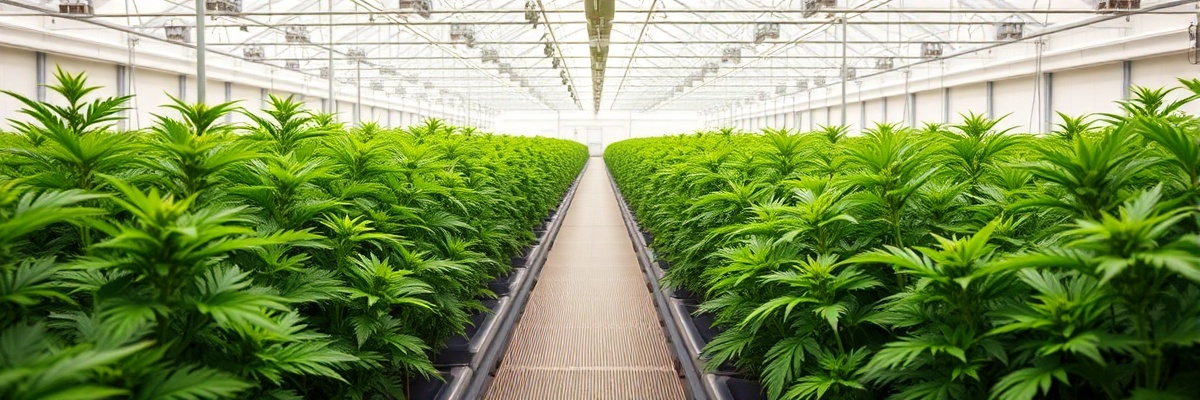
Greenhouses use natural light with supplemental electric lighting. This strikes a balance between cost and quality. Craft greenhouses in Maine can produce flower with potency and flavor that rivals indoor.
Pros: Lower power cost than indoor, natural light improves terpene profiles, faster build-out than purpose-built indoor.
Cons: Fewer harvests per year (2-4 depending on configuration), temperature fluctuations affect consistency, requires light deprivation infrastructure for year-round harvest.
Timeline: Harvest typically once every 8-12 weeks with light deprivation. Season extension with supplemental lighting.
Typical Yield: 40-80 grams per square foot annually depending on supplemental light levels.
Outdoor Cultivation
Outdoor growing in Maine has a short season. Most outdoor cultivators plant in May and harvest in September or October. That gives you roughly 4-5 months of active growth. Flower quality has improved with better genetics, but weather risk remains real.
Pros: Lowest overhead, no electricity for lighting, sustainable production, appeal to sun-grown buyers.
Cons: Seasonal only (one harvest per year), weather-dependent yields, limited control over environment, mold risk in Maine's humid fall.
Timeline: Plant May, harvest September-October. 120-150 day outdoor cycle.
Typical Yield: 20-50 grams per square foot depending on season length and weather.
Maine Tier Licensing Breakdown
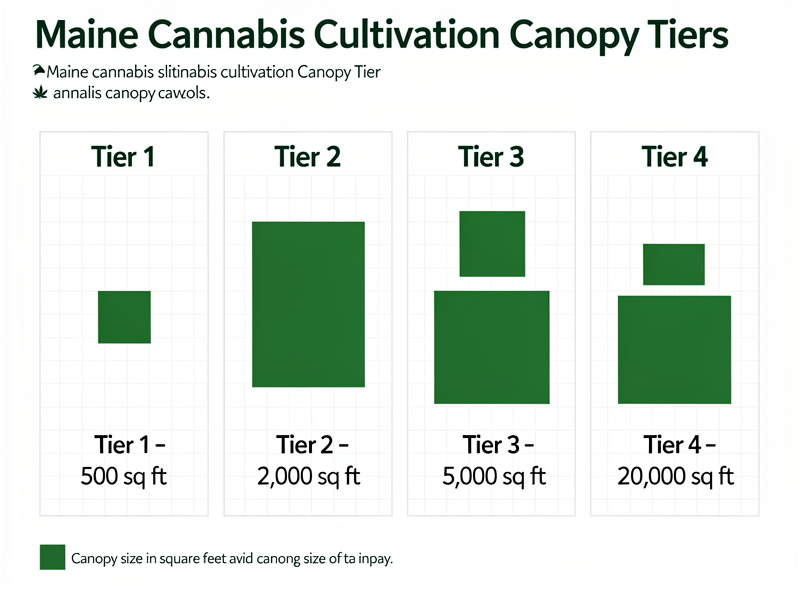
Maine's OCP issues four cultivation tiers. Each tier defines your canopy limit and fee structure. Upgrading requires a new application and fee.
Tier 1 — Small Craft Cultivation
Canopy: Up to 2,000 square feet of flowering space
Application Fee: $500 Source: OCP Fee Schedule, 2026
Annual Renewal: $1,000
Best For: First-time growers, single-team operations, craft brands focusing on quality over volume. Tier 1 works well for operators who want to prove genetics and processes before scaling.
Tier 2 — Mid-Size Cultivation
Canopy: 2,001 to 7,000 square feet
Application Fee: $1,500 Source: OCP Fee Schedule, 2026
Annual Renewal: $2,500
Best For: Established operations with tested sales channels. Tier 2 allows economies of scale while keeping management manageable. Many dispensaries source from Tier 2 growers.
Tier 3 — Commercial Cultivation
Canopy: 7,001 to 20,000 square feet
Application Fee: $3,000 Source: OCP Fee Schedule, 2026
Annual Renewal: $5,000
Best For: Operators with retail or manufacturing downstream. Tier 3 enables vertical integration strategies. You supply your own store or extraction operation.
Tier 4 — Large-Scale Production
Canopy: Unlimited (no square footage cap)
Application Fee: $5,000 Source: OCP Fee Schedule, 2026
Annual Renewal: $10,000
Best For: Operators targeting wholesale accounts or multi-store operations. Tier 4 requires professional management, substantial capital, and compliance infrastructure.
Canopy vs. Total Facility Footprint
Maine defines canopy as actual flowering space. Storage areas, vegetative rooms, and office space do not count against your tier limit. This matters when evaluating locations. A 10,000 sq ft building might support Tier 3 production. The flowering rooms could be as small as 7,000 sq ft.
Cost Projections by Tier
Use this table to estimate startup costs. These are rough ranges for a basic but compliant facility. Interior build-out, equipment, and licensing fees are included. Land and building costs vary significantly by region.
| Tier | Canopy | Startup Range | Annual OpEx | Yield Est. |
|---|---|---|---|---|
| Tier 1 | 2K sq ft | $100K - $200K | $150K - $250K | 120K - 200K grams |
| Tier 2 | 7K sq ft | $300K - $600K | $400K - $700K | 420K - 700K grams |
| Tier 3 | 20K sq ft | $800K - $1.5M | $1M - $1.8M | 1.2M - 2M grams |
| Tier 4 | Unlimited | $2M+ | $2.5M+ | Varies |
Cost factors include lighting type (LED vs. HPS), automation level, and whether you build or retrofit. HVAC for a sealed indoor grow runs $25-50 per square foot. A basic LED install runs $50-100 per square foot. These are separate from general build-out. Source: Maine OCP Cultivation Guidance, 2026
Facility Build-Out Requirements
Maine requires cultivators to meet specific facility standards. The OCP inspects before licensing and during operations. Understanding requirements upfront prevents costly retrofits.
Soil and Growing Medium
If you use soil, it must be sourced from approved suppliers. Maine requires documentation of all growing medium inputs. Many indoor growers use soilless mixes or coco coir for better control. Work with your OCP inspector to confirm your medium meets state requirements for contaminant testing.
Lighting Requirements
Indoor operations must use artificial lighting. The OCP does not mandate specific spectrum, but your facility plan must include adequate photosynthetic photon flux density (PPFD) for the canopy. Most successful indoor Maine growers use either high-pressure sodium (HPS) or full-spectrum LED. LED setups have higher upfront cost but lower long-term energy spend.
HVAC and Environmental Control
Cannabis thrives at 68-77°F with 40-60% relative humidity. Maine's climate makes year-round outdoor growing impossible. Indoor and greenhouse operations must maintain these ranges regardless of outside conditions. Your HVAC system is the most critical infrastructure investment. Under-spec it and you get mold, pests, and hermaphroditism. Over-spec it and you waste money.
For indoor: budget 1 ton of AC per 1,000 square feet of flowering space. Add dehumidification capacity separate from cooling. Many new growers under-size dehumidification and pay for it in yield loss.
Security Infrastructure
All cultivation sites must meet OCP security requirements. This includes:
- Perimeter security: fencing, access control, and alarm systems
- Camera coverage: all entry points, canopy areas, and storage rooms
- Visitor logs: all non-employee entries recorded
- Product storage: locked, monitored vault or secure area
Security plans are submitted with your application. The OCP reviews them during inspection. Budget $15,000-30,000 for compliant security infrastructure at Tier 1-2.
Water and Wastewater
Cannabis needs consistent water. Municipal water is typically fine with proper filtration. If using well water, test for heavy metals and pathogens before use. Wastewater disposal must comply with MaineDEP requirements. Runoff from cultivation must not enter waterways.
Integrated Pest Management (IPM)
The OCP mandates an IPM program for all cultivation sites. This is not optional. You must document your pest management protocols and maintain records. The goal is pest prevention with minimal pesticide use.
IPM Core Elements
- Prevention: Air filtration, entry controls, and clean propagated material
- Monitoring: Weekly scouting logs, sticky cards, and visual inspection records
- Thresholds: Action triggers for intervention (not every pest requires treatment)
- Treatment: Cultural, biological, and chemical controls in that order of preference
- Documentation: All treatments logged in Metrc with product and method
Common Maine Cultivation Pests
The humid Maine environment creates conditions for powdery mildew, botrytis, and spider mites. These three cause the most crop loss in the state. Your IPM plan must specifically address them.
Powdery mildew: prevention through humidity control and airflow. Fungicide treatment if detected early.
Botrytis (bud rot): harvest timing, humidity control, and careful trimming to prevent hidden rot pockets.
Spider mites: biological controls (Phytoseiidae mites) work well in indoor environments. Chemical treatments as backup only.
OCP Inspection Expectations
Inspectors will ask for your IPM plan during every inspection. They check for documentation of scouting, treatment logs, and product labels. If you cannot produce records, it is a violation. Keep a binder or digital log of every IPM activity.
Harvest and Post-Harvest Handling
How you harvest and cure affects the final product as much as your grow. High-quality flower requires proper post-harvest handling. This is where craft operators separate from commodity producers.
Harvest Timing
Harvest when trichomes are 15-20% amber. Use a jewelers loupe or microscope to check. Early harvest gives uplifting effects. Late harvest gives couch-lock. Most Maine growers target the middle for balanced profiles. Timing matters more than any other single factor.
Trimming
Wet trim or dry trim? Both work. Wet trim is faster and less space-intensive. Dry trim preserves more terpenes if you have the space. Most Maine indoor growers wet trim because the controlled environment makes it practical.
Drying
Dry in a dark room at 60-65°F with 50-60% relative humidity. Allow 7-14 days depending on density and environment. The goal is slow dry that preserves chlorophyll without allowing mold growth. Check daily. Move product if hot spots develop.
Curing
Cure in airtight containers (mason jars or sealed bulk containers) for 2-4 weeks minimum. Open containers daily for the first two weeks to release moisture and check for mold. Well-cured flower has better flavor, smoother smoke, and stronger effects. This step separates craft from commodity.
Laboratory Testing
All Maine cannabis must be tested before sale. Required tests include potency, microbial pathogens, heavy metals, residual solvents (for concentrates), and pesticide residues. Use an OCP-approved testing lab. Most Maine labs turn results in 5-10 business days. Do not skip testing. Products failing microbial limits must be destroyed and documented in Metrc.
Storage
Store finished product in a secured, monitored area. Maintain temperatures below 75°F. Light degrades THC over time. Keep containers sealed. Label with harvest date, lot number, and test results. Product must be traceable to harvest batch in Metrc.
Maine-Specific Compliance
Cultivators in Maine operate under OCP oversight with specific rules that differ from other states. Understanding these rules prevents violations that can cost your license.
OCP Inspections
The OCP inspects before your license is issued. They also conduct routine unannounced inspections during operations. Inspectors check facility security, IPM documentation, Metrc records, testing logs, and storage conditions. Always maintain a clean, documented operation. When an inspector arrives, your logs should match your physical inventory.
METRC Tracking
Metrc is Maine's seed-to-sale tracking system. Every plant must be tagged with a Metrc RFID tag at planting. Tags track the plant through harvest, processing, and final sale. You must record every state change: planting, vegetation, harvest, packaging, and destruction.
Metrc data must match your physical inventory at all times. Discrepancies trigger OCP review. If your Metrc counts do not match your floor counts, resolve them immediately. Most operators maintain a weekly reconciliation process.
Product Origination
Maine law requires that all cannabis sold through licensed dispensaries originates from Maine-licensed cultivators. You cannot legally purchase flower from out-of-state operators. If you operate a cultivator, you can sell to any licensed Maine dispensary, manufacturer, or micro-business.
280E Tax Strategy for Cultivators
Cultivation costs are deductible as Cost of Goods Sold (COGS) under Section 280E. This is a significant advantage over retailers. Your power, nutrients, labor, and facility costs can reduce taxable income. Work with a Maine cannabis CPA to ensure you are capturing every legitimate COGS deduction. See our 280E guide for the full breakdown.
Real Maine Grower Insight
import Callout from '@network/ui/Callout'; export default Callout;License Application Checklist
Before submitting to the OCP, confirm you have:
- Municipal approval letter for your proposed location
- Site plan showing canopy allocation and facility layout
- Security plan with camera placement and access controls
- IPM plan documenting your pest management approach
- Metrc account established and operational
- Water source documentation (municipal or tested well)
- Wastewater disposal plan meeting MaineDEP standards
- Owner background checks completed
- Application fee payment
The OCP typically reviews complete applications within 60-120 days. Incomplete applications delay processing. Respond to OCP information requests promptly.
"Maine's craft cultivation market rewards patience and precision over rapid scaling. The operators who build sustainable businesses here are the ones who treat each harvest as a craft iteration—dialing in their environment, perfecting their cure, and building a reputation for consistency. Tier 1 and Tier 2 operators who focus on quality consistently outperform larger operations chasing volume." — David Whiting, Director of Cultivation Operations, Maine Organic Craft Growers Association
Key Citations
- 28-B M.R.S. Section 401 — Cultivation license tiers
- Section 402 — Facility and security requirements
- Maine OCP Adult-Use Cultivation Page — Application forms and guidance
- Metrc — Seed-to-sale tracking system
Related Guides
- Cannabis Taxation & 280E — Understand how cultivation costs reduce your tax burden
- Maine Cannabis Regulations — OCP compliance and operational rules
- Dispensary Licensing Guide — Sell your product through licensed retail
- Real Estate for Cultivation — Find and permitted locations
Disclaimer: This guide is for informational purposes only. Cultivation licensing, facility requirements, and tax rules change. Consult the Maine OCP and qualified professionals before making business decisions.